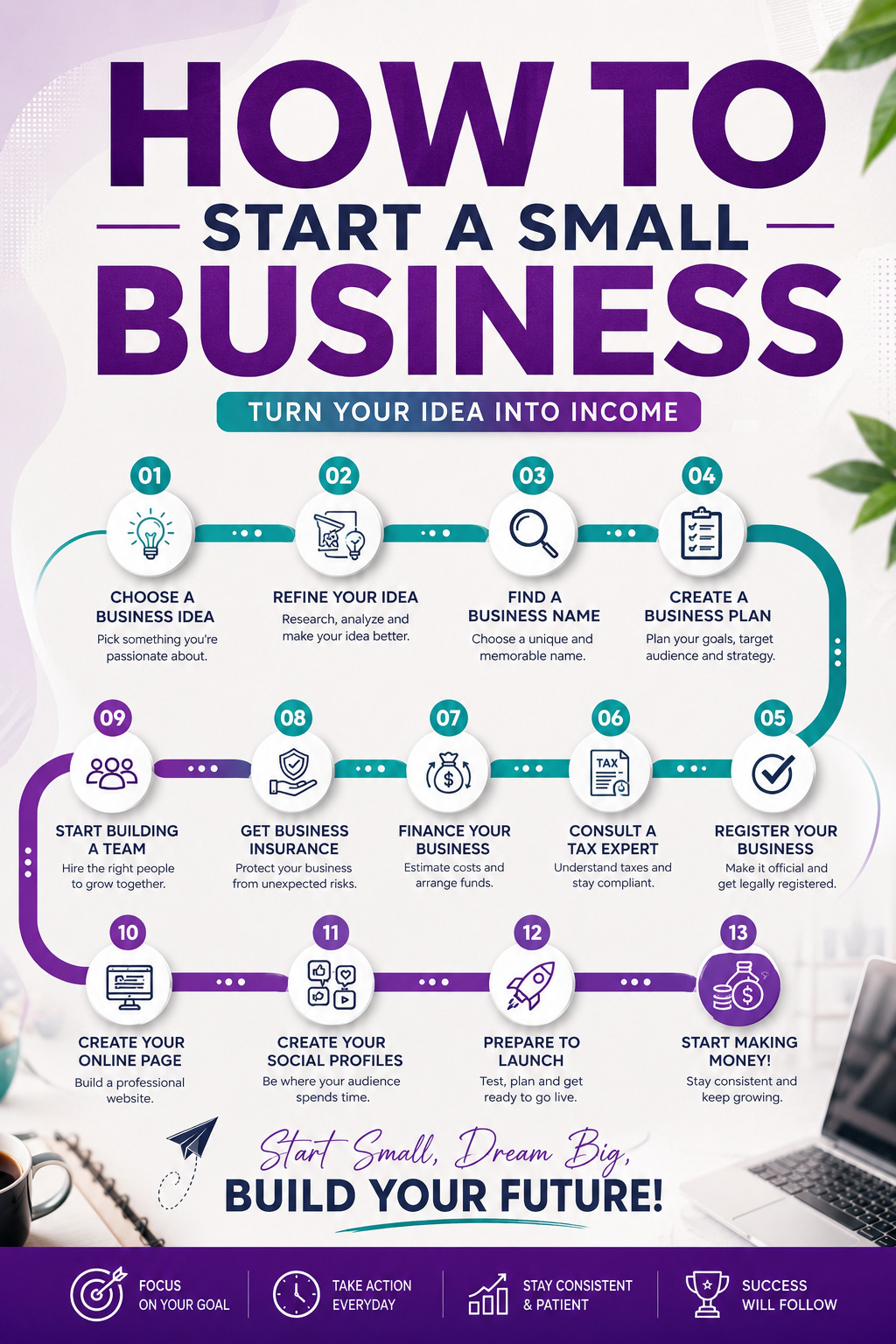
Starting a small business is one of the most practical ways to build financial independence and long-term stability. However, success doesn’t come from just having an idea—it comes from planning, execution, and consistent improvement. This guide breaks down the process into clear, actionable steps.
1. Identify a Profitable Business Idea
Every successful business begins with the right idea. Instead of choosing randomly, focus on:
- Problems people face daily
- Services or products in demand locally or online
- Your own skills, experience, or passion
- Market gaps that competitors are ignoring
A strong idea is both useful and scalable.
2. Research the Market
Before investing money, understand your target market:
- Who are your customers?
- What are they willing to pay?
- Who are your competitors?
- What makes your offer different?
Market research reduces risk and helps you position your business correctly from the start.
3. Create a Simple Business Plan
A business plan doesn’t need to be complicated. It should include:
- Business goals
- Target audience
- Startup costs
- Pricing strategy
- Marketing plan
- Expected profit
A clear plan acts as your roadmap and keeps you focused.
4. Choose a Legal Structure
Your business structure affects taxes, liability, and registration requirements. Common options include:
- Sole proprietorship (simplest setup)
- Partnership (two or more owners)
- Limited liability company (LLC) or equivalent structure
In the U.S., many entrepreneurs also refer to guidelines from the Small Business Administration for legal and funding advice.
5. Register Your Business
Once your structure is decided:
- Choose a unique business name
- Register it with local authorities
- Apply for required licenses or permits
- Get a tax identification number (if required in your country)
This step makes your business official and legal.
6. Arrange Startup Capital
Most small businesses need some initial investment. You can fund it through:
- Personal savings
- Family or friends
- Bank loans
- Online crowdfunding
- Small business grants
Start small and scale gradually to reduce financial pressure.
7. Set Up Your Operations
Now build the foundation of your business:
- Buy necessary tools or equipment
- Set up a workspace (home or office)
- Create systems for orders, delivery, or service
- Choose suppliers if needed
Efficiency at this stage saves time and money later.
8. Build Your Online Presence
In today’s digital world, visibility is essential. Focus on:
- A simple website or landing page
- Social media profiles (Facebook, Instagram, TikTok, LinkedIn)
- Google Business Profile (for local businesses)
- Basic branding (logo, colors, messaging)
Even small businesses can grow fast with strong online marketing.
9. Start Marketing Your Business
Without marketing, even great products fail. Try:
- Social media content marketing
- Paid ads (Facebook, Google, etc.)
- Word-of-mouth referrals
- Discounts or launch offers
- Influencer collaborations
Consistency matters more than budget at the beginning.
10. Monitor, Improve, and Scale
Once your business is running:
- Track profits and expenses
- Collect customer feedback
- Improve your product or service
- Expand only when stable
Growth should be gradual and data-driven.
Final Thoughts
Starting a small business is not about perfection—it’s about taking the first step and improving along the way. With the right idea, proper planning, and consistent effort, even a small startup can grow into a successful long-term venture.