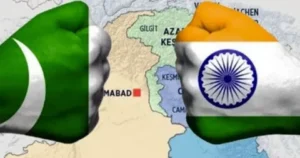
Recent Flashpoint: The May 2025 Conflict
The most significant recent event remains the four-day armed confrontation in May 2025. It began after a terrorist attack in Pahalgam, Indian-administered Kashmir, on April 22, 2025, which killed over two dozen civilians (mostly tourists). India accused Pakistan-linked groups and launched precision strikes—codenamed Operation Sindoor—targeting alleged terrorist infrastructure in Pakistan and Pakistan-occupied Kashmir. Pakistan denied involvement, responded militarily, and both sides exchanged fire before a ceasefire took hold around May 10, 2025.
US President Donald Trump has repeatedly claimed credit for de-escalating the crisis, stating he intervened personally (including alleged tariff threats) to prevent a “near-nuclear” war and “saved millions of lives.” He reiterated this during recent appearances, including at the World Economic Forum in Davos and in White House remarks marking his first year back in office. Indian officials have consistently rejected any third-party mediation role, insisting the ceasefire resulted from direct military-channel communication.
Both countries have since accelerated military modernization:
- India announced plans to launch over 50 advanced surveillance satellites in the coming years to address intelligence gaps exposed during the conflict.
- Pakistan has highlighted successes of its air assets (including Chinese co-produced JF-17 jets) and pursued naval upgrades.
Current Diplomatic and Security Landscape
Tensions remain high along multiple fronts:
- Water disputes — Pakistan has accused India at the United Nations of “weaponising water” by placing the 1960 Indus Waters Treaty in abeyance post-conflict, describing it as an “unprecedented crisis” threatening its irrigation-dependent agriculture.
- Border incidents — Drone intrusions across the Line of Control (LoC) and international border continue. India’s Army Chief recently warned Pakistan to control such violations, with multiple sightings reported in Jammu, Rajouri, and Poonch sectors in early January 2026. Countermeasures have been activated.
- Terror alerts — Indian sources issued warnings of Pakistan-backed terrorists and Khalistani elements potentially planning attacks around Republic Day (January 26, 2026), particularly in Delhi.
- Diplomatic gestures — A notable December 31, 2025, handshake between India’s External Affairs Minister S. Jaishankar and Pakistan’s National Assembly Speaker in Dhaka (during a funeral event) sparked speculation about possible dialogue revival in 2026. Analysts remain divided on whether it signals a genuine thaw.
Broader Geopolitical Context
At the recent World Economic Forum (Davos 2026), Trump launched his “Board of Peace” initiative (focused on Gaza but framed broadly). Pakistan’s Prime Minister Shehbaz Sharif participated, while India stayed absent from the key staging—fueling commentary on shifting alignments. Trump’s repeated praise for Pakistan’s military leadership during the event drew attention.
A December 2025 report by the US-based Council on Foreign Relations (CFR) flagged a “moderate likelihood” of renewed armed conflict in 2026, triggered by heightened terrorist activity in Kashmir or cross-border militancy. Experts note both sides’ restraint so far (no major escalation despite November 2025 terror incidents in both capitals), but warn of risks from hyper-nationalism, non-state actors, and nuclear capabilities.
Bilateral trade remains minimal, airspace restrictions persist (costing Indian airlines significantly), and people-to-people contact is limited. Cricket ties are also strained, with ongoing disputes over ICC decisions and hosting.
Outlook for 2026
While no full-scale war appears imminent, the relationship stays fragile. Analysts suggest any major terror incident could reignite hostilities, though mutual nuclear deterrence and external pressures encourage caution. Diplomatic backchannels exist, but public rhetoric in both capitals remains hardline. The coming months—especially around key dates like Republic Day—will test whether restraint holds or if flashpoints lead to another crisis.
This situation underscores why India-Pakistan relations remain one of South Asia’s most volatile flashpoints in 2026.