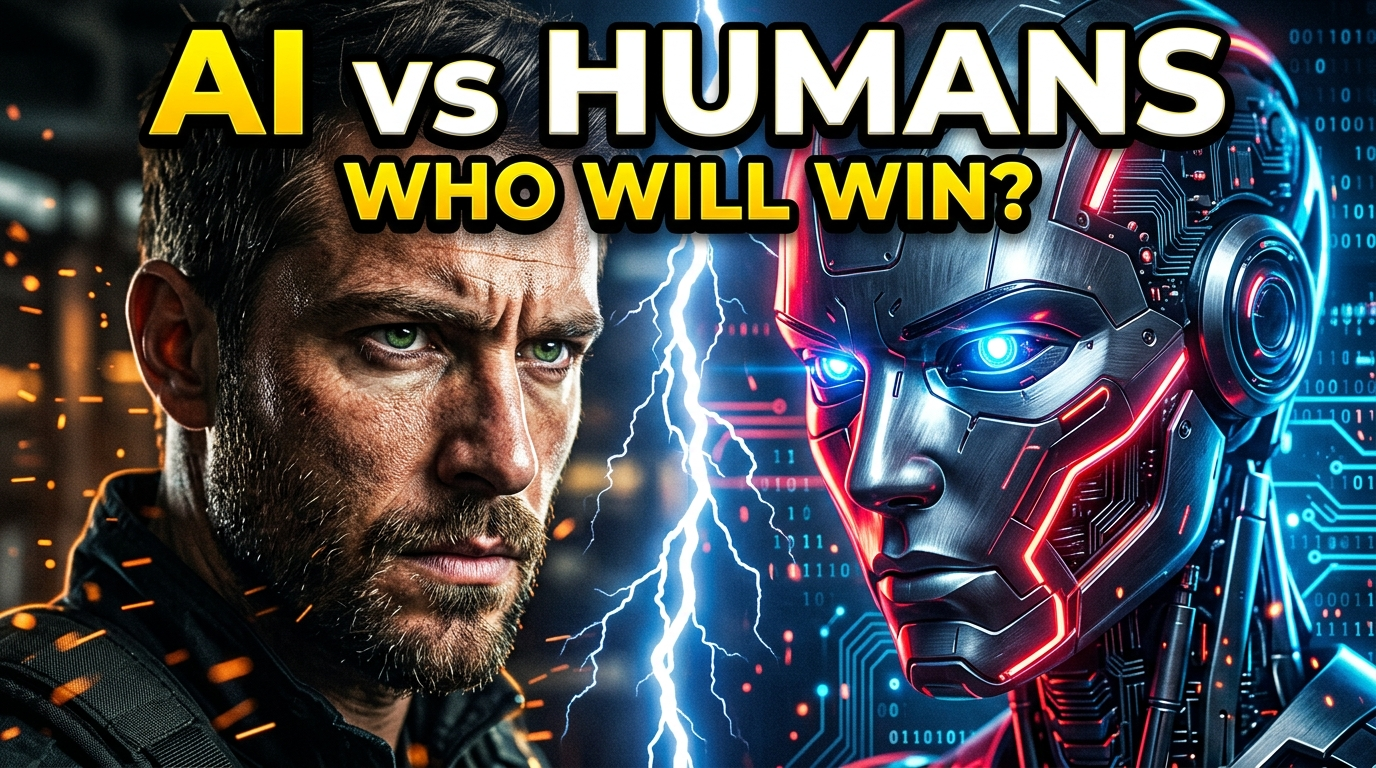
The question sounds like a sci-fi showdown: machines versus mankind. But the reality is far more complex—and far more interesting. The future isn’t shaping up to be a battle for dominance. It’s becoming a story about coexistence, collaboration, and control.
The Rise of Artificial Intelligence
Artificial Intelligence (AI) has moved rapidly from theory to everyday reality. From voice assistants and recommendation systems to self-driving technology and medical diagnostics, AI is now deeply embedded in modern life. It processes data faster than any human, learns patterns with incredible accuracy, and performs repetitive tasks without fatigue.
In fields like healthcare, AI can analyze thousands of medical records in seconds, helping doctors detect diseases earlier. In business, it predicts customer behavior and optimizes operations. These advantages make AI not just powerful—but essential.
What Humans Still Do Better
Despite AI’s impressive capabilities, humans still hold a critical edge. Creativity, emotional intelligence, moral judgment, and adaptability are areas where machines struggle.
AI can generate content, but it doesn’t truly feel inspiration. It can simulate empathy, but it doesn’t experience emotions. Humans, on the other hand, bring context, culture, ethics, and meaning into decisions. A machine might suggest the most efficient solution—but a human decides whether it’s the right one.
The Fear Factor
A major concern is whether AI will replace humans entirely. Automation is already changing the job market. Roles involving repetitive tasks are being taken over by machines, leading to uncertainty and fear.
However, history shows that technological revolutions don’t just eliminate jobs—they create new ones. The challenge lies in adaptation. People who learn to work alongside AI, rather than compete with it, will have the advantage.
Collaboration, Not Competition
The future isn’t about AI vs humans—it’s about AI with humans. Think of AI as a tool, not a rival. When used correctly, it amplifies human potential.
- Doctors use AI to make better diagnoses
- Designers use AI to enhance creativity
- Businesses use AI to make smarter decisions
In each case, AI handles data and efficiency, while humans provide direction and purpose.
Who Will Actually “Win”?
If the question is taken literally, AI might outperform humans in specific tasks—speed, calculation, and data processing. But “winning” isn’t about outperforming in isolated areas.
Humans design, control, and guide AI systems. The real power lies in how we choose to use this technology. If misused, AI can create risks. If used wisely, it can solve some of humanity’s biggest challenges.
The Real Future
The future will likely belong to those who understand both technology and humanity. Instead of asking who will win, a better question is:
How can humans and AI work together to build a better world?
Final Thoughts
AI is not here to replace humanity—it’s here to reshape it. The winners of the future won’t be machines or humans alone, but those who successfully combine the strengths of both.
The real competition isn’t AI vs humans.
It’s humans who adapt vs humans who don’t.