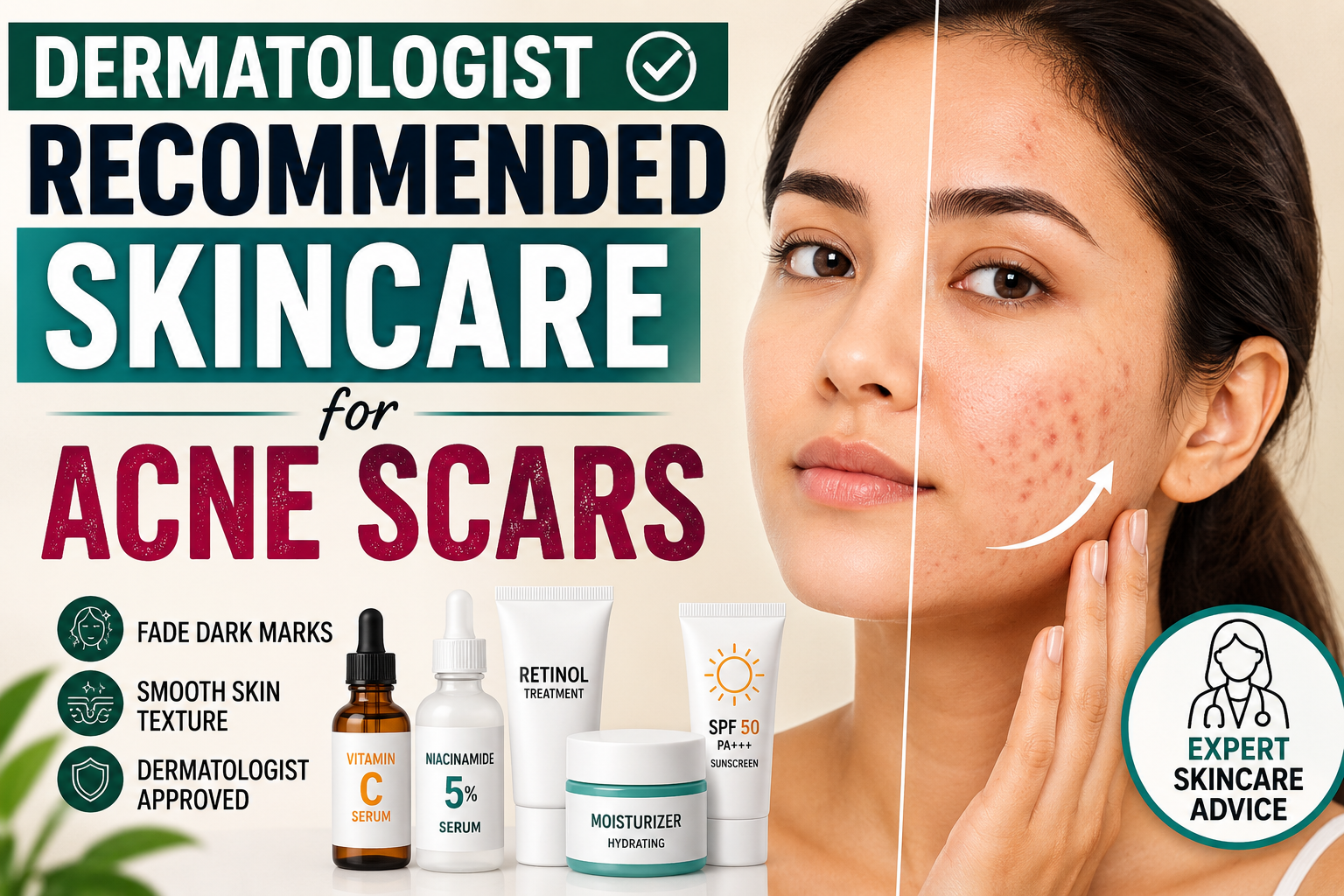
Acne scars can affect confidence and skin texture long after breakouts disappear. The good news is that dermatologists recommend proven skincare ingredients and routines that can visibly reduce acne scars over time. Whether you have dark marks, red spots, or deep textured scars, using the right skincare products consistently can help improve your skin’s appearance safely and effectively.
Understanding Acne Scars
Before choosing skincare products, it’s important to understand the type of acne scars you have.
1. Post-Inflammatory Hyperpigmentation (PIH)
These are dark brown or black marks left after acne heals. They are common in medium to darker skin tones.
2. Post-Inflammatory Erythema (PIE)
These appear as red or pink marks and are more common in lighter skin tones.
3. Textured Acne Scars
These include:
- Ice pick scars
- Boxcar scars
- Rolling scars
Textured scars usually require stronger treatments or professional dermatology procedures.
Best Dermatologist Recommended Ingredients for Acne Scars
Retinoids
Retinoids are among the most recommended skincare ingredients by dermatologists. They increase cell turnover, boost collagen production, and help fade discoloration.
Benefits:
- Smooth rough skin texture
- Reduce dark acne marks
- Improve collagen production
- Prevent future breakouts
Popular retinoids include:
- Retinol
- Adapalene
- Tretinoin
Start slowly to avoid irritation and always use sunscreen during the day.
Vitamin C
Vitamin C is a powerful antioxidant that brightens skin and reduces pigmentation caused by acne.
Benefits:
- Fades dark spots
- Evens skin tone
- Protects against sun damage
- Boosts skin radiance
Dermatologists often recommend using Vitamin C serum in the morning for best results.
Niacinamide
Niacinamide is gentle and suitable for sensitive or acne-prone skin.
Benefits:
- Reduces redness
- Minimizes dark spots
- Controls oil production
- Strengthens skin barrier
A 5% niacinamide serum is usually effective without causing irritation.
Alpha Hydroxy Acids (AHAs)
AHAs like glycolic acid and lactic acid exfoliate dead skin cells and improve skin texture.
Benefits:
- Brighten acne scars
- Smooth uneven texture
- Improve skin renewal
Use AHAs 2–3 times weekly to avoid over-exfoliation.
Salicylic Acid
Salicylic acid penetrates pores deeply and helps treat acne while improving mild scars.
Benefits:
- Unclogs pores
- Reduces inflammation
- Prevents future acne
- Smooths skin texture
This ingredient works especially well for oily and acne-prone skin.
Sunscreen
Dermatologists consider sunscreen the most important step for acne scar treatment. Sun exposure can darken scars and slow healing.
Choose:
- Broad-spectrum SPF 30 or higher
- Non-comedogenic formula
- Lightweight gel or fluid sunscreen
Apply sunscreen every morning, even indoors.
Dermatologist Recommended Skincare Routine for Acne Scars
Morning Routine
Step 1: Gentle Cleanser
Use a sulfate-free cleanser that removes oil without stripping the skin.
Step 2: Vitamin C or Niacinamide Serum
Apply a lightweight serum to brighten scars and calm inflammation.
Step 3: Moisturizer
Choose a non-comedogenic moisturizer with ceramides or hyaluronic acid.
Step 4: Sunscreen
Finish with SPF 30+ sunscreen daily.
Night Routine
Step 1: Cleanser
Wash away dirt, sunscreen, and excess oil.
Step 2: Retinoid
Apply a pea-sized amount of retinol or adapalene.
Step 3: Moisturizer
Use a hydrating moisturizer to reduce irritation and support skin healing.
Professional Treatments Dermatologists Recommend
Some acne scars cannot fully improve with skincare alone. Dermatologists may suggest professional procedures for deeper scars.
Chemical Peels
Improve pigmentation and skin texture by exfoliating deeper skin layers.
Microneedling
Stimulates collagen production and helps reduce textured scars.
Laser Treatments
Effective for both pigmentation and deep acne scars.
Subcision
Used for rolling scars by breaking scar tissue under the skin.
Dermal Fillers
Can temporarily improve depressed acne scars.
Always consult a licensed dermatologist before choosing advanced treatments.
Common Mistakes That Make Acne Scars Worse
Avoid these habits:
- Picking or squeezing pimples
- Skipping sunscreen
- Over-exfoliating skin
- Using harsh scrubs
- Trying too many active ingredients at once
Consistency is more important than using aggressive products.
How Long Does It Take to Fade Acne Scars?
Results depend on the type and severity of scars.
Typical timeline:
- Mild dark spots: 6–12 weeks
- Moderate pigmentation: 3–6 months
- Deep textured scars: Several months with professional treatment
Patience and regular skincare use are essential for visible improvement.
Final Thoughts
Dermatologist recommended skincare for acne scars focuses on gentle treatment, proven ingredients, and daily sun protection. Retinoids, Vitamin C, niacinamide, exfoliating acids, and sunscreen are among the most effective options for improving skin tone and texture.
For best results:
- Follow a simple routine
- Introduce active ingredients slowly
- Stay consistent
- Protect your skin from sun exposure
If your scars are deep or stubborn, consulting a dermatologist can help you choose advanced treatments tailored to your skin type.